
For many families, deciding between aged care at home and moving into residential care is one of the hardest decisions they’ll face. It’s rarely just a practical question. It touches on independence, identity, safety and what a loved one actually wants for the years ahead. There’s no single right answer, but understanding how each option works, and what’s changed recently in the Australian aged care system, can make the decision much clearer.
What’s changed in aged care funding?
Since November 2025, the Support at Home program has replaced Home Care Packages and the Short-Term Restorative Care Programme as the main way older Australians access funded care at home. It’s worth understanding because it directly affects what home-based care can now look like.
Under Support at Home, people are assessed and placed into one of eight funding classifications based on their care needs, ranging from roughly $10,731 to $78,106 per year. Funding covers three types of support: clinical care such as nursing, occupational therapy and podiatry; independence support like showering assistance, medication help, transport and respite; and everyday living help such as cleaning, gardening, shopping and meal preparation. Clinical care is now fully government-funded, meaning no co-contribution is required for nursing or allied health services delivered at home. There’s also a lifetime cap on personal contributions of around $135,318, shared across both home care and residential care, so costs don’t climb indefinitely.
There are also short-term pathways worth knowing about: a Restorative Care Pathway to help someone regain function after an illness or injury, an Assistive Technology and Home Modifications scheme for things like rails, ramps and bathroom modifications, and an End-of-Life Pathway offering higher-priority support for people in their final months who wish to stay at home.
This shift matters because it means home care can now support genuinely complex and clinical needs, not just help with everyday tasks. For families who assumed residential care was the only option once nursing needs became involved, that’s no longer necessarily true.
The case for staying at home:
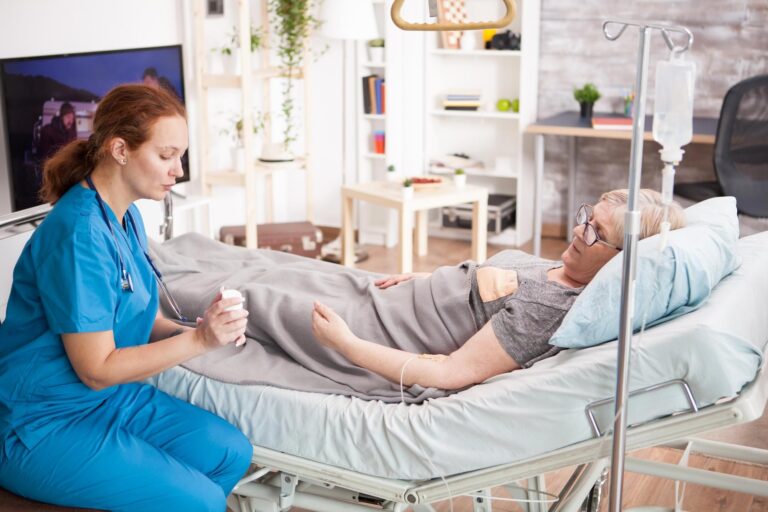
Most people, given the choice, want to remain in their own home. It’s familiar, it preserves independence and routine, and it keeps people close to their community, pets and belongings. With the right support in place, including nursing visits, personal care, allied health and everyday assistance, many people with quite complex health needs can be cared for safely and comfortably at home.
Home-based care also tends to be more flexible. Services can be adjusted as needs change, family and friends can stay closely involved in day-to-day care, and there’s no need to adapt to a new environment, routine or set of caregivers. For couples, staying at home together, even when one partner needs more support than the other, is often deeply important.
The limits of home care worth being honest about include the need for a safe and suitable home environment, the risk of social isolation if family and community support is thin, and the reality that very high or round-the-clock care needs can become difficult to fully meet at home, both practically and financially, even with the improved funding available.
The case for residential care:
Residential aged care makes the most sense when a person’s care needs are extensive, unpredictable, or require 24-hour supervision that home-based services can’t reliably provide, for example advanced dementia with wandering risk, complex medical needs requiring constant monitoring, or a home environment that simply can’t be made safe.
Residential care also offers built-in social connection, structured activities, and the reassurance of qualified staff on-site at all times. For some families, particularly where a primary carer is exhausted, unwell themselves, or living far away, it can also relieve a level of caregiving pressure that has become unsustainable.
The trade-off is a loss of independence and familiar surroundings, and for many older Australians that’s a genuinely difficult adjustment, even when the care itself is good.
How to actually make the decision:
Rather than treating this as a single choice, it helps to work through it in stages. Start with an aged care assessment, which will determine what level and type of support someone is eligible for and is the same starting point for both home and residential pathways. Be realistic about current needs, not just today’s needs, but where a health condition is likely to head over the next one to two years. Look honestly at the home environment and support network, including whether family, friends or paid carers can realistically provide the coverage needed. Talk to the person at the centre of the decision, wherever possible, about what matters most to them, independence, familiarity, safety or social connection, because these values should carry real weight. And revisit the decision periodically, since needs change, and a home care arrangement that works well now may need to be reassessed in a year or two, in either direction.
It’s also worth remembering that this isn’t always a one-time, permanent choice. Many people use home care for years, sometimes stepping up support through Support at Home’s higher classifications or short-term pathways, before residential care becomes necessary, if it ever does.
How Rensat Nursing Services can help:
For families in the Serpentine-Jarrahdale Shire and surrounding areas trying to work out what’s possible at home, our team provides qualified, person-centred nursing and complex care support that can make staying at home a realistic, safe option for longer than many families expect. We work alongside clients, families and other healthcare providers to build a care plan around real needs, not a generic package.
If you’re weighing up aged care options for yourself or a family member, call us on 0457 360 173 or email admin@rensatnursing.com.au to talk through what home-based support could look like.